A Veterans Day post, 65 years after Catch-22
Published in 1961, Catch-22 turns 65 this year. Veterans still read it, and many say they have met the people in it: a Cathcart, a Major Major, a Milo.
This Veterans Day, that experience raises a question for anyone who leads. Are we helping people accomplish the mission, or rewarding them for looking successful? Heller's novel, David Hackworth's memoir, and Peter Drucker's work offer three ways to look at the problem. Together, they point to lessons we can put to work.
Heller: the story
Joseph Heller flew 60 combat missions as a bombardier in World War II, based in the Mediterranean. Catch-22 is a novel, not his diary, and it is satire: it stretches real problems until you cannot miss them.
Colonel Cathcart is the best example. He cares about how neat the bomb pattern looks in the photos, even when the bombs do not hit the target. Looking good has replaced doing the job.
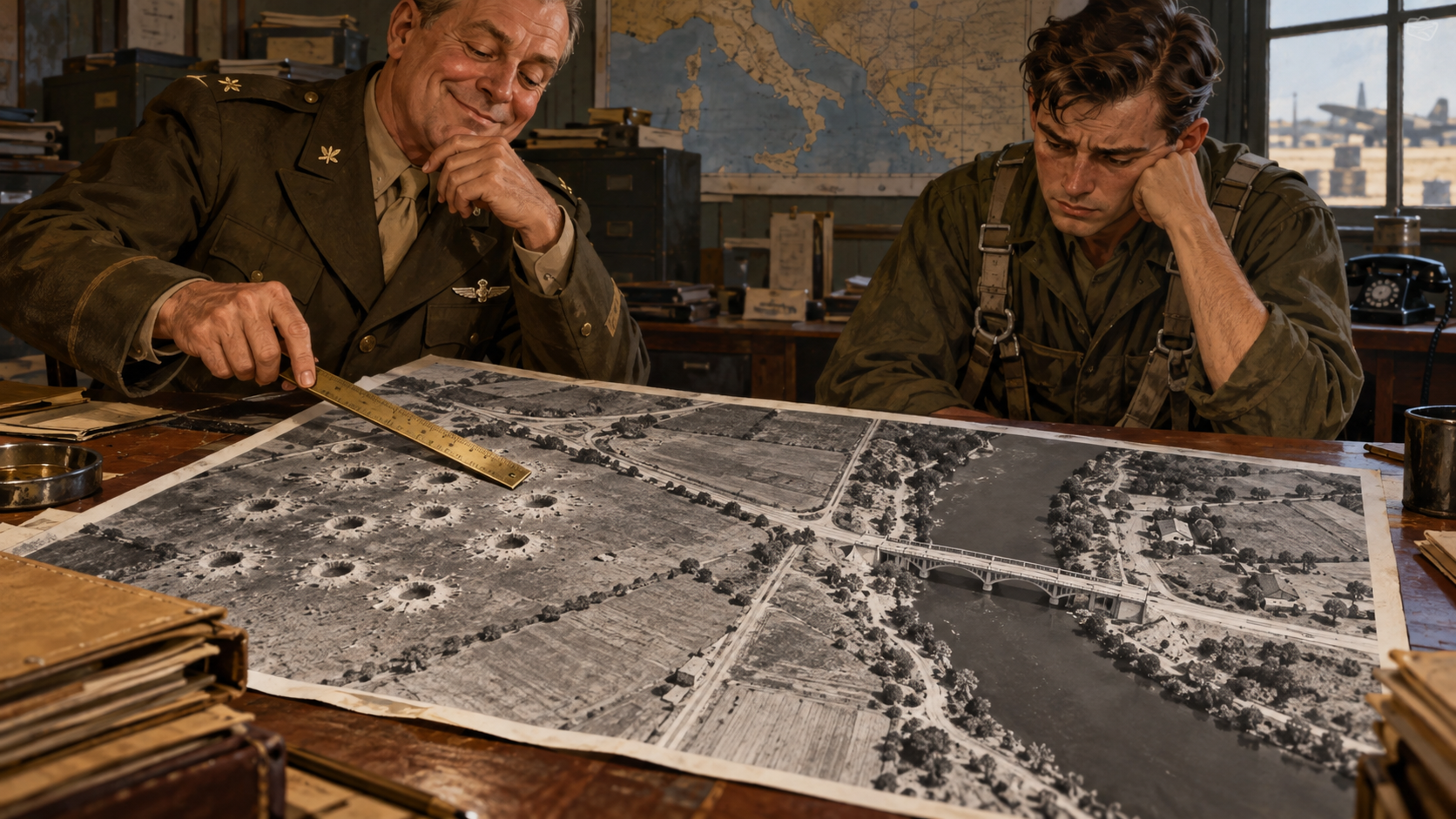
Cathcart also keeps raising the number of missions his men must fly before they can go home. Each time they get close to the finish line, he moves it. The men face more danger, and the promise of going home stops meaning anything. What looks like greater effort from above becomes a loss of trust below. In the real air war, crews were rotated home after a set tour. In the novel, that promise keeps changing.
Two more characters show the same problem. Major Major has a high rank and no real power. Milo Minderbinder starts a supply business that ends up serving only itself.
The lesson is simple. When a number or a title replaces the real goal, the real work suffers.
Hackworth: the cost
David Hackworth joined the Army as a teenager, fought in Korea and Vietnam, and became one of the most decorated soldiers of his time. He later left the Army after he criticized how the Vietnam War was run.
His memoir, About Face, was written with Julie Sherman. It is his own account, and other soldiers may remember things differently. But it describes problems that Heller made funny, and it tells what they cost.
Hackworth describes "ticket punching," which means taking jobs because they look good on a record, not because they help the mission. He also describes counselors who coached officers toward the assignments that would help them climb the ladder fastest. The goal became the next promotion instead of the work itself.
Why does this happen? Some things are easy to count, like medals, schools, and jobs held. Others are hard to measure, like honesty, good judgment, and being ready for a hard task. When promotions follow the easy numbers, people learn to chase them. Over the years, the system moves up people who are good at getting promoted. Some of them are also good leaders, but those measures alone cannot tell the difference.

Ambition is fine. The trouble is a system that rewards the wrong things, and people who choose to go along with it.
Hackworth also names leaders who got it right. One was Colonel Glover S. Johns Jr. His advice, from a farewell talk in 1962, comes down to this: think before you act. Tell your soldiers what, how, and why. Do not hover over your leaders; let them learn from mistakes in training. Stay ahead of your boss. Never be satisfied, and keep asking how it can be done better.
A flawed system does not erase a leader's choices. Johns did his job well inside it.
Drucker: ask what the system rewards
Peter Drucker was not a veteran. He studied big companies, starting with General Motors in the 1940s, and he saw the same kinds of problems.
He taught that efficiency means doing a task well, while effectiveness means doing the right task. A team can work fast, spend little, and still miss what its customers need.
When people make poor choices, his approach suggests two questions. What choices are they making? And what does our system reward them for?
Picture a help desk that is judged only by how many cases it closes. Staff learn to close cases fast, even when the customer still has a problem. The report looks great, and the service gets worse.
Shared lessons in leadership
Put these writers side by side and the overlap is hard to miss. Drucker was a consultant. Johns was an Army colonel. Jocko Willink and Leif Babin are former Navy SEAL officers who wrote Extreme Ownership.
Know the purpose. Drucker said goals should describe results, not busy work. Johns told his soldiers what, how, and why. Willink and Babin call it "commander's intent": everyone knows what winning looks like.
Match authority to responsibility. Drucker said people who answer for results need the power to affect them. Johns did not oversupervise. Willink and Babin call it "decentralized command," where the leaders closest to the problem make the call.
Get the truth to people who can act. Drucker said information must reach the people who can use it. Johns said to stay ahead of your boss. Willink and Babin teach leading up and down the chain of command.
Keep improving. Drucker saw management as a tool, not the goal. Johns said never be satisfied. Willink and Babin say to check your ego and own the problem.
Overlap is not proof. But when a consultant, an Army colonel, and two SEAL officers land on similar advice, it is worth testing at work.
What veterans say today
The novel is 65 years old, but the problem is still with us. Veterans of Iraq and Afghanistan still find their own experiences in it.
Matthew Komatsu, who served in the Air Force, calls Catch-22 the "only 'war book' capable of making the fullest sense" of what he saw. He matches moments from his own service to its characters, including a bad briefing with a senior general that reminded him of Cathcart. Read his essay.
Army veteran and writer Peter Molin points to a pattern in recent military writing. He describes enlisted soldiers who keep units running while distrusting the system, and junior officers frustrated by pointless rules. In an essay with Iraq and Afghanistan veteran J. M. Meyer, he argues that humor and ridicule help soldiers cope with what seems absurd. Read Molin's discussion.
Marine veteran Elliot Ackerman says, "Catch-22 is about the circular and self-defeating nature of war." He also describes what a mission gives people: "a very clear sense of purpose," and a chance to work "alongside people who might become some of your very best friends." Read the interview.
These accounts suggest why leadership failures cut so deeply. People commit themselves to a purpose and depend on one another to carry it out. Leaders owe them a clear explanation of how the work serves that purpose.
Six steps to try at work
Systems shape us, but we still choose. You do not need a new policy to start.
Share the purpose. Write one sentence about what your work is for, and share it with your team.
Check results, not just activity. Pick one number you track and ask what it is supposed to show. Then ask someone whether the real result matches.
Look at what you reward. Think about who got praised or promoted last. Did they do work that mattered, or work that looked good?
Match power to duty. If someone is responsible for a result, let them change what affects it.
Make bad news safe. The next time someone brings you a problem, say thank you first.
Ask the people on the receiving end. This week, talk to one customer, student, patient, or neighbor and ask what changed for them.

Then ask one more question: what would show that our numbers are wrong? It is the hardest one, and it is how you catch a problem before other people pay for it.
Gratitude beyond one day
Veterans Day is a day to thank people who served. Another way to say thanks is to listen to what they learned and put it to use. No single veteran speaks for all, but Heller, Hackworth, and the veterans above are a few voices worth hearing.
We can carry their lessons into our jobs, schools, churches, and towns. An effective organization is one where the system helps people do the work it exists to do.